
✍️ Reviewed for accuracy against peer-reviewed research and guidelines from the World Health Organization (WHO) and registered gastroenterologists. Last updated: March 2026.
Your gut is far more than a digestive organ. It is home to trillions of microorganisms — collectively called the gut microbiome — that influence your immune system, mental health, energy levels, and even your mood. When your gut is healthy, your entire body benefits. When it is not, you may experience bloating, fatigue, skin problems, and poor immunity.
The good news? Learning how to improve gut health naturally at home does not require expensive supplements or drastic diets. In this guide, you will find practical, evidence-based gut health tips that anyone can follow — whether you are in Karachi, Lahore, London, or New York.
Signs of an Unhealthy Gut You Should Not Ignore
Before improving your gut health, it helps to recognize the warning signs. Common symptoms of an imbalanced gut microbiome include:
- Frequent bloating, gas, or abdominal discomfort
- Constipation or irregular bowel habits
- Persistent fatigue or low energy levels
- Skin issues such as acne or eczema
- Food intolerances or sensitivities
- Weakened immune system — falling sick frequently
- Mood swings, anxiety, or brain fog (linked to the gut-brain axis)
⚠️ Important: If you experience persistent digestive symptoms, consult a qualified healthcare professional or gastroenterologist before making major dietary changes.
1. Eat More Fiber-Rich Foods to Feed Good Gut Bacteria
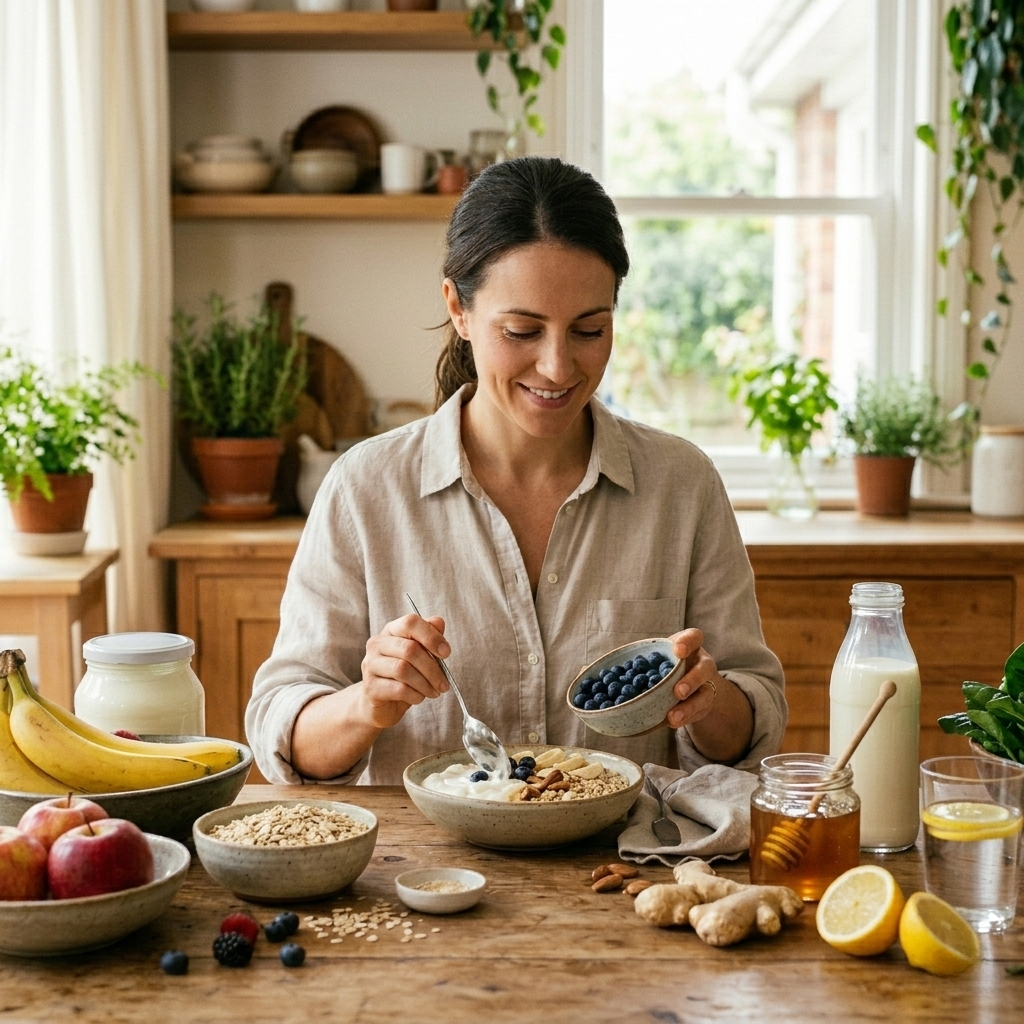
Dietary fiber is the single most important nutrient for your gut microbiome diet. Fiber acts as a prebiotic — it feeds the beneficial bacteria in your intestines, helping them grow and maintain balance. When good bacteria thrive, they produce short-chain fatty acids that reduce inflammation and strengthen the intestinal lining.
Best fiber-rich foods for gut health:
- Whole grains: oats, brown rice, whole wheat bread
- Legumes: lentils (masoor dal), chickpeas (chana), kidney beans (rajma)
- Fruits: apples, bananas, papaya, pears
- Vegetables: broccoli, carrots, spinach, garlic
- Seeds: flaxseeds (alsi), chia seeds
Tip: Increase fiber gradually to avoid temporary bloating. Aim for 25–30g of fiber per day as recommended by nutrition guidelines.
2. Include the Best Probiotic Foods for Gut Health Daily
Fermented foods are natural sources of probiotics — live beneficial bacteria that support a balanced gut environment. Adding probiotic foods for gut health to your daily meals is one of the most effective ways to improve digestion naturally.
Locally Available Probiotic Foods (Pakistan)
- Dahi (دہی) — Homemade yogurt, rich in live beneficial bacteria
- Lassi (لسّی) — A probiotic yogurt drink, excellent for digestion
- Chaas (چھاچھ) — Spiced buttermilk, supports gut balance
- Achaar (اچار) — Fermented pickles made with mustard seeds
- Kanji (کانجی) — Fermented drink made with black carrots
- Sirka (سرکہ) — Natural vinegar such as apple cider vinegar
Internationally Available Probiotic Foods
- Kefir — Fermented milk drink with diverse bacterial strains
- Sauerkraut — Fermented cabbage, rich in Lactobacillus bacteria
- Kimchi — Korean fermented vegetables with anti-inflammatory properties
- Miso — Fermented soybean paste, supports digestive balance
- Kombucha — Fermented tea with probiotic cultures
3. Reduce Processed Foods and Added Sugar
Highly processed foods — including fast food, packaged snacks, sugary drinks, and refined flour products — are among the biggest threats to your gut bacteria balance. These foods are low in fiber, high in unhealthy fats, and often contain artificial additives that disrupt the microbiome. Research consistently links ultra-processed food consumption to gut inflammation and digestive disorders.
Healthy swaps to try:
- Replace sugary snacks with fresh fruit or a handful of nuts
- Choose whole grain bread or brown rice over white refined versions
- Cook more meals at home using fresh, whole ingredients
- Swap sodas with water, herbal teas, or homemade lassi
4. Stay Well Hydrated to Support Digestive Health
Water is essential for digestive health home remedies and is often overlooked. Proper hydration helps break down food, supports nutrient absorption, and keeps the intestinal lining moist so that food moves smoothly through the digestive tract. Inadequate water intake is a common cause of constipation and bloating.
Aim for at least 8 glasses (2 litres) of water per day. In Pakistan’s warmer climate, your body may need more, especially during summer months. Hydrating foods like cucumbers, watermelon, and citrus fruits also contribute to your daily fluid intake.
5. Manage Stress — Your Gut and Brain Are Deeply Connected
One of the most overlooked aspects of how to improve digestion naturally is stress management. The gut-brain axis is a two-way communication network between your digestive system and your brain. When you are stressed, your body releases hormones that slow digestion, alter gut bacteria composition, and weaken the intestinal lining — worsening conditions like IBS and acid reflux.
Effective stress-reduction habits for gut health:
- Daily mindfulness meditation (even 10 minutes helps)
- Deep breathing exercises before meals
- Light physical activity such as walking, yoga, or stretching
- Journaling to process emotions and daily stressors
- Consistent sleep schedule — irregular sleep disrupts gut bacteria balance
6. Exercise Regularly to Stimulate Gut Motility
Physical activity directly benefits your digestive system. Exercise stimulates the intestinal muscles, helping food move through the digestive tract more efficiently. Regular movement also reduces bloating, relieves constipation, supports a healthy weight, and increases diversity in the gut microbiome.
You do not need an intense workout routine. Health guidelines recommend at least 150 minutes of moderate-intensity activity per week. A brisk 20-minute walk after meals, light yoga, or cycling are all beneficial for gut health.
Best Natural Gut Health Foods Available in Pakistan
Many traditional Pakistani foods are scientifically recognized as beneficial for digestive health. You do not need to look far:
- Turmeric (Haldi) — Contains curcumin, which reduces gut inflammation
- Garlic (Lehsan) — Natural antibacterial properties that balance gut bacteria
- Fenugreek seeds (Methi dana) — Helps relieve constipation and aids digestion
- Ginger (Adrak) — Reduces nausea, bloating, and digestive discomfort
- Desi ghee — Supports digestion when consumed in moderation
- Papaya (Papita) — Contains digestive enzymes (papain) that ease digestion
- Daal (lentils) — High in fiber and prebiotics that feed good bacteria
Prebiotics vs Probiotics: What Is the Difference?
Understanding the difference between prebiotics vs probiotics is key to an effective gut microbiome diet:
- Probiotics are live beneficial bacteria found in fermented foods (yogurt, kefir, kimchi). They directly add good microbes to your gut.
- Prebiotics are non-digestible fibers that feed existing good bacteria (found in garlic, onions, bananas, oats, asparagus). Think of them as fertilizer for your gut bacteria.
- For best results, combine both: eat fiber-rich prebiotic foods alongside fermented probiotic-rich foods.
Note on supplements: While probiotic supplements are widely marketed, nutrition experts generally recommend obtaining probiotics through whole foods whenever possible, as foods contain additional nutrients that supplements cannot fully replicate. Always consult a doctor before starting any supplement.
7. Prioritize Quality Sleep for a Healthier Microbiome
Your gut health and sleep are closely connected. During sleep, your body repairs the gut lining and regulates digestive processes. Irregular sleep schedules and insufficient rest disrupt gut bacteria composition, slow digestion, and increase inflammation. Most adults need 7–9 hours of quality sleep per night. A consistent bedtime, limiting caffeine after midday, and reducing screen exposure before bed all support better sleep and better gut health.
Your Daily Gut Health Checklist
- ✅ Eat at least 5 servings of fruits and vegetables
- ✅ Include a probiotic food (yogurt, lassi, kefir) with meals
- ✅ Drink 8+ glasses of water throughout the day
- ✅ Move your body for at least 20–30 minutes
- ✅ Avoid heavily processed snacks and sugary drinks
- ✅ Spend 10 minutes on a stress-relief activity
- ✅ Maintain a consistent sleep and meal schedule
Frequently Asked Questions (FAQs)
Q: How long does it take to improve gut health naturally?
A: Most people begin noticing digestive improvements within 2–4 weeks of consistent dietary and lifestyle changes. Full microbiome restoration can take several months depending on individual health conditions.
Q: Is lassi good for gut health?
A: Yes. Lassi made from natural dahi (yogurt) contains live probiotic bacteria that support gut microbiome diversity and aid digestion. Opt for homemade or natural lassi over heavily sweetened commercial versions.
Q: What are the fastest ways to relieve bloating naturally?
A: Drinking warm water or ginger tea, gentle abdominal massage, short walks after meals, and reducing carbonated beverages can provide natural relief from bloating. Persistent bloating warrants a visit to a healthcare provider.
Conclusion: Small Changes, Big Gut Health Results
Knowing how to improve gut health naturally at home is the first step — acting on it daily is what creates lasting change. Your gut health does not improve overnight, but small, consistent habits build a powerful foundation. Start with one or two changes this week: add a serving of dahi to your meals, go for a short walk after dinner, or swap a processed snack for a piece of fruit.
Over time, a balanced gut microbiome diet improves your digestion, strengthens your immunity, lifts your mood, and gives you more energy — benefits that ripple through every aspect of your life.
Medical Disclaimer: This blog is written for general informational purposes only and does not constitute medical advice. The content has been reviewed against reputable health sources but should not replace the advice of a qualified healthcare professional or registered dietitian. Always consult your doctor before making significant changes to your diet or lifestyle, particularly if you have existing medical conditions. Individual results may vary.